
Improving Foot Function With Flat Feet Treatment

Flat feet can affect more than the way a person stands or walks. The arches on the bottom of the feet help support the body and guide movement through the legs. When these arches are lower or flattened, the feet can move differently when walking. This change can affect how forces travel from the feet toward the ankles, knees, and hips. Knee osteoarthritis is a condition in which the tissues inside a joint become damaged, causing pain, stiffness, and reduced movement. Research has found an association between flat feet and knee osteoarthritis. People with flat feet and knee osteoarthritis can experience greater knee pain and reduced physical function. However, research does not show that flat feet directly cause knee osteoarthritis.

A podiatrist can examine the feet, ankles, and legs to determine how foot structure affects movement. The evaluation can include checking the height of the arches, observing how the feet move while walking, and assessing areas of pain or stiffness. A podiatrist can also consider the severity of knee symptoms when developing a treatment plan. This is important because flat feet can vary from mild to more pronounced changes in foot position. Research involving patients with knee osteoarthritis found that greater flat-foot severity was associated with more knee pain, stiffness, and difficulty with physical function. These findings suggest that foot structure should be considered when evaluating patients who have both flat feet and knee osteoarthritis.

Treatment from a podiatrist focuses on improving foot function and supporting comfortable movement. Depending on the patient's needs, care can include custom orthotics, footwear recommendations, and exercises designed to support foot and lower-leg function. Orthotics are inserts designed to support the foot and improve how pressure is distributed when walking. A podiatrist can also monitor changes in foot and knee symptoms and coordinate care with other healthcare providers when appropriate. Addressing foot mechanics does not cure knee osteoarthritis, but evaluating the feet can be an important part of managing symptoms and maintaining mobility. If you have symptoms of flat feet or knee osteoarthritis, it is suggested that you schedule an appointment with a podiatrist for a diagnosis and appropriate treatment.

Flatfoot is a condition many people suffer from. If you have flat feet, contact one of our podiatrists from Cleveland Foot & Ankle Clinic. Our doctors will treat your foot and ankle needs.

What Are Flat Feet?

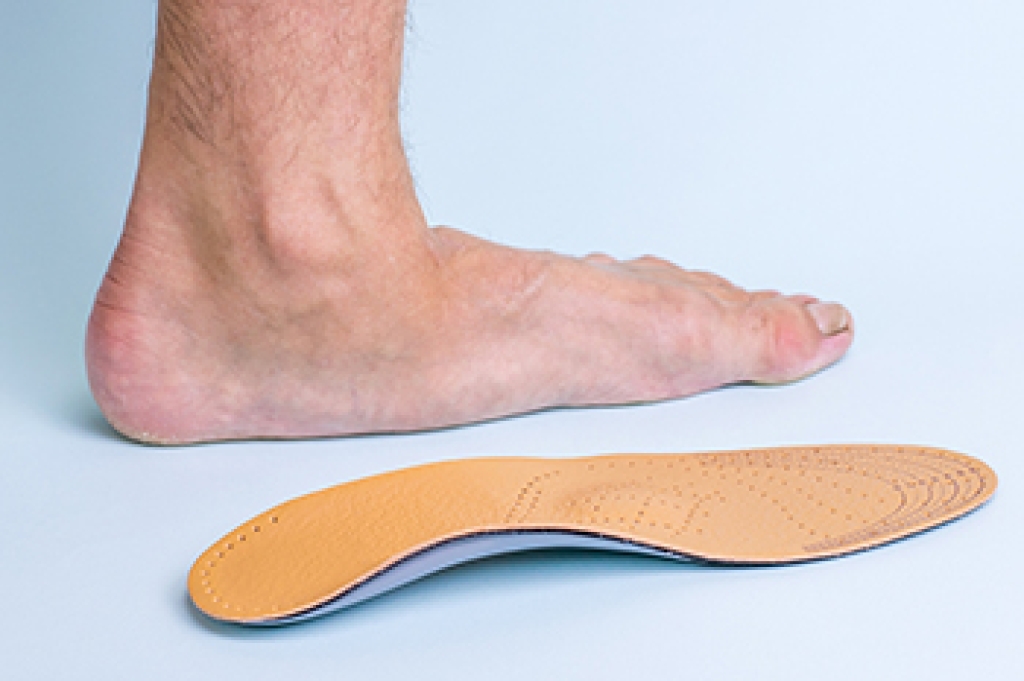
Flatfoot is a condition in which the arch of the foot is depressed and the sole of the foot is almost completely in contact with the ground. About 20-30% of the population generally has flat feet because their arches never formed during growth.

Conditions & Problems:

Having flat feet makes it difficult to run or walk because of the stress placed on the ankles.

Alignment – The general alignment of your legs can be disrupted, because the ankles move inward which can cause major discomfort.

Knees – If you have complications with your knees, flat feet can be a contributor to arthritis in that area.  

Symptoms

  • Pain around the heel or arch area
  • Trouble standing on the tip toe
  • Swelling around the inside of the ankle
  • Flat look to one or both feet
  • Having your shoes feel uneven when worn

Treatment

If you are experiencing pain and stress on the foot you may weaken the posterior tibial tendon, which runs around the inside of the ankle. 

If you have any questions, please feel free to contact our offices located in Cleveland, Independence, and Kent, OH . We offer the newest diagnostic and treatment technologies for all your foot care needs.

Read more about Flat Feet

High Heels and Common Foot Problems

Foot problems caused by wearing high heels are a frequent concern, especially among people who wear them daily for work or social settings. High heels shift body weight forward, placing excessive pressure on the forefoot and toes. This unnatural position can lead to structural changes over time. Common conditions linked to high heel use include hammertoe and neuromas, both of which develop from repeated stress and compression. The altered foot position can also affect posture and disrupt natural walking patterns.


Symptoms often begin with mild discomfort, but can progress to more serious issues. Individuals may notice pain in the ball of the foot, swelling, redness, and burning sensations. Numbness may develop due to nerve irritation, especially in cases of neuroma. Hammertoe can cause visible bending of the toe joints, leading to friction and irritation in shoes. High heels also limit the power and motion of the ankle joint, reducing flexibility and increasing strain on surrounding muscles and tendons.


Risk factors include frequent use of wearing narrow or high-heeled shoes, prolonged standing, and poor foot support. Individuals with certain foot structures, such as high arches or imbalanced gait, may be more prone to developing complications. The instability created by elevated heels can increase the risk of falls and ankle injuries. Over time, these factors contribute to long term damage and discomfort if not addressed early.


Preventing foot problems begins with choosing supportive footwear and limiting the duration of high heel use. Stretching exercises and proper foot care can help maintain flexibility and reduce strain. Alternating shoe types and ensuring a proper fit can also improve comfort and alignment. If you have persistent foot or ankle pain from wearing high heels, it is suggested that you consult a podiatrist for effective relief tips and guidance on choosing more appropriate footwear.

High heels have a history of causing foot and ankle problems. If you have any concerns about your feet or ankles, contact one of our podiatrists from Cleveland Foot & Ankle Clinic. Our doctors can provide the care you need to keep you pain-free and on your feet.

Effects of High Heels on the Feet

High heels are popular shoes among women because of their many styles and societal appeal.  Despite this, high heels can still cause many health problems if worn too frequently.

Which Parts of My Body Will Be Affected by High Heels?

  • Ankle Joints
  • Achilles Tendon – May shorten and stiffen with prolonged wear
  • Balls of the Feet
  • Knees – Heels cause the knees to bend constantly, creating stress on them
  • Back – They decrease the spine’s ability to absorb shock, which may lead to back pain.  The vertebrae of the lower back may compress.

What Kinds of Foot Problems Can Develop from Wearing High Heels?

  • Corns
  • Calluses
  • Hammertoe
  • Bunions
  • Morton’s Neuroma
  • Plantar Fasciitis

How Can I Still Wear High Heels and Maintain Foot Health?

If you want to wear high heeled shoes, make sure that you are not wearing them every day, as this will help prevent long term physical problems.  Try wearing thicker heels as opposed to stilettos to distribute weight more evenly across the feet.  Always make sure you are wearing the proper shoes for the right occasion, such as sneakers for exercising.  If you walk to work, try carrying your heels with you and changing into them once you arrive at work.  Adding inserts to your heels can help cushion your feet and absorb shock. Full foot inserts or metatarsal pads are available. 

If you have any questions, please feel free to contact our offices located in Cleveland, Independence, and Kent, OH . We offer the newest diagnostic and treatment technologies for all your foot care needs.
Read more about Why High Heels Are Not Ideal for Healthy Feet

Connect With Us

scroll-to-top