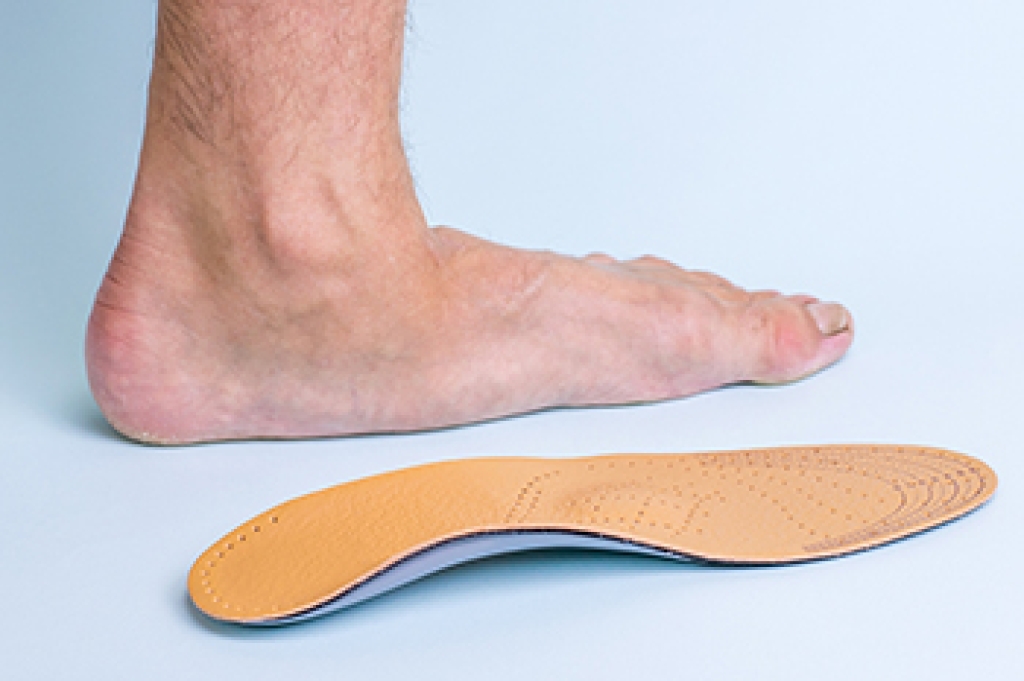
Flat feet can affect more than the way a person stands or walks. The arches on the bottom of the feet help support the body and guide movement through the legs. When these arches are lower or flattened, the feet can move differently when walking. This change can affect how forces travel from the feet toward the ankles, knees, and hips. Knee osteoarthritis is a condition in which the tissues inside a joint become damaged, causing pain, stiffness, and reduced movement. Research has found an association between flat feet and knee osteoarthritis. People with flat feet and knee osteoarthritis can experience greater knee pain and reduced physical function. However, research does not show that flat feet directly cause knee osteoarthritis.
A podiatrist can examine the feet, ankles, and legs to determine how foot structure affects movement. The evaluation can include checking the height of the arches, observing how the feet move while walking, and assessing areas of pain or stiffness. A podiatrist can also consider the severity of knee symptoms when developing a treatment plan. This is important because flat feet can vary from mild to more pronounced changes in foot position. Research involving patients with knee osteoarthritis found that greater flat-foot severity was associated with more knee pain, stiffness, and difficulty with physical function. These findings suggest that foot structure should be considered when evaluating patients who have both flat feet and knee osteoarthritis.
Treatment from a podiatrist focuses on improving foot function and supporting comfortable movement. Depending on the patient's needs, care can include custom orthotics, footwear recommendations, and exercises designed to support foot and lower-leg function. Orthotics are inserts designed to support the foot and improve how pressure is distributed when walking. A podiatrist can also monitor changes in foot and knee symptoms and coordinate care with other healthcare providers when appropriate. Addressing foot mechanics does not cure knee osteoarthritis, but evaluating the feet can be an important part of managing symptoms and maintaining mobility. If you have symptoms of flat feet or knee osteoarthritis, it is suggested that you schedule an appointment with a podiatrist for a diagnosis and appropriate treatment.
Flatfoot is a condition many people suffer from. If you have flat feet, contact one of our podiatrists from Cleveland Foot & Ankle Clinic. Our doctors will treat your foot and ankle needs.
What Are Flat Feet?
Flatfoot is a condition in which the arch of the foot is depressed and the sole of the foot is almost completely in contact with the ground. About 20-30% of the population generally has flat feet because their arches never formed during growth.
Conditions & Problems:
Having flat feet makes it difficult to run or walk because of the stress placed on the ankles.
Alignment – The general alignment of your legs can be disrupted, because the ankles move inward which can cause major discomfort.
Knees – If you have complications with your knees, flat feet can be a contributor to arthritis in that area.
Symptoms
- Pain around the heel or arch area
- Trouble standing on the tip toe
- Swelling around the inside of the ankle
- Flat look to one or both feet
- Having your shoes feel uneven when worn
Treatment
If you are experiencing pain and stress on the foot you may weaken the posterior tibial tendon, which runs around the inside of the ankle.
If you have any questions, please feel free to contact our offices located in Cleveland, Independence, and Kent, OH . We offer the newest diagnostic and treatment technologies for all your foot care needs.
