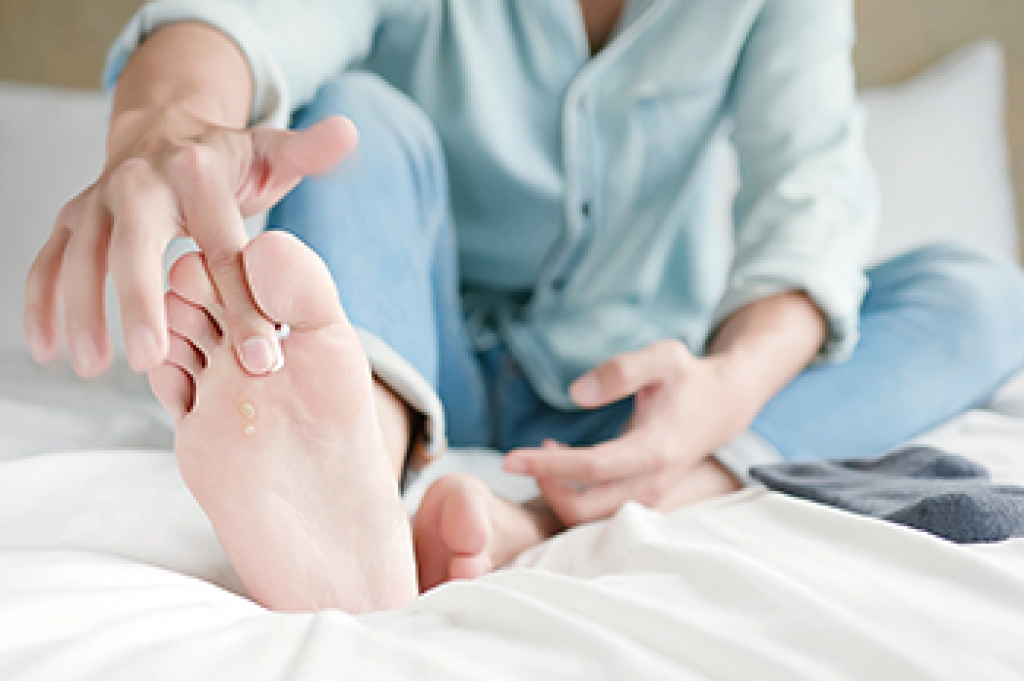
Athlete’s foot is a fungal infection that forms when fungus grows on the skin of the feet, especially in warm and damp spaces between the toes. It can affect people of all ages. The risk of athlete’s foot increases when people walk barefoot in shared locker rooms, wear heavy boots for long hours, sweat excessively, or have circulation problems. Tight shoes that lack adequate support or worn-out flip-flops can trap moisture around the toes. Symptoms of athlete's foot include itching, peeling skin, redness, and soft, whitish areas between the toes. In some cases, small blisters can form on the inner foot or dry scaling may develop along the sole. A podiatrist can examine the infected area, confirm the cause, and guide a treatment that helps clear the infection and prevent complications. If you have an athlete's foot infection, it is suggested that you make an appointment with a podiatrist for a diagnosis and treatment.
Athlete’s Foot
Athlete’s foot is often an uncomfortable condition to experience. Thankfully, podiatrists specialize in treating athlete’s foot and offer the best treatment options. If you have any questions about athlete’s foot, consult with one of our podiatrists from Cleveland Foot & Ankle Clinic. Our doctors will assess your condition and provide you with quality treatment.
What Is Athlete’s Foot?
Tinea pedis, more commonly known as athlete’s foot, is a non-serious and common fungal infection of the foot. Athlete’s foot is contagious and can be contracted by touching someone who has it or infected surfaces. The most common places contaminated by it are public showers, locker rooms, and swimming pools. Once contracted, it grows on feet that are left inside moist, dark, and warm shoes and socks.
Prevention
The most effective ways to prevent athlete’s foot include:
- Thoroughly washing and drying feet
- Avoid going barefoot in locker rooms and public showers
- Using shower shoes in public showers
- Wearing socks that allow the feet to breathe
- Changing socks and shoes frequently if you sweat a lot
Symptoms
Athlete’s foot initially occurs as a rash between the toes. However, if left undiagnosed, it can spread to the sides and bottom of the feet, toenails, and if touched by hand, the hands themselves. Symptoms include:
- Redness
- Burning
- Itching
- Scaly and peeling skin
Diagnosis and Treatment
Diagnosis is quick and easy. Skin samples will be taken and either viewed under a microscope or sent to a lab for testing. Sometimes, a podiatrist can diagnose it based on simply looking at it. Once confirmed, treatment options include oral and topical antifungal medications.
If you have any questions, please feel free to contact our offices located in Cleveland, Independence, and Kent, OH . We offer the newest diagnostic and treatment technologies for all your foot care needs.
